
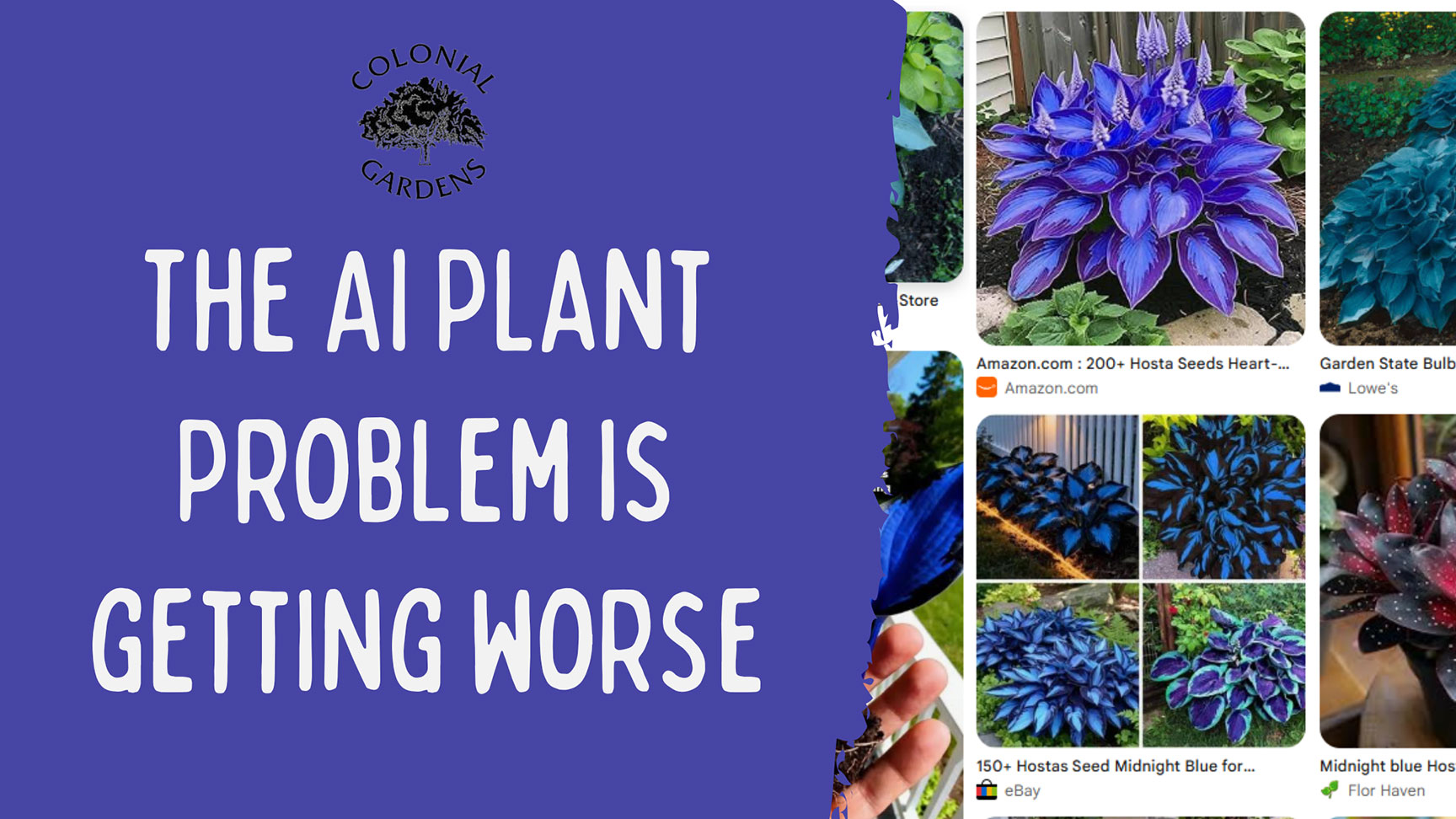
Since AI image generators hit the market, the internet has been swamped with fake plant scams. It’s gotten worse.
What’s a “Midnight Blue Hosta?”
That’s the thought running through my head as I look at our Google Business page. It’s one of the most popular searches leading potential customers to our garden center’s page and I’ve never heard of it before.
I google it myself. Pictures of an electric blue hosta fill my screen.
Oh no, another AI plant.
For two years, I’ve inadvertently become a resource for people wanting to know if a plant is real or not. I wrote my original blog when the first AI image generators surfaced and Facebook became flooded with alien pictures of fake plants, offering fake seeds in the comments. It was picked up by The Verge magazine and suddenly my little blog gained a global audience. I still get messages about it now.
My experience googling this plant is different. Now, the Gemini summary pops up on the top of every page with photos, a description, and sources. The AI summary lists the Midnight Blue Hosta as a “rare plant…” I move my mouse over the sources.
Amazon. Walmart.
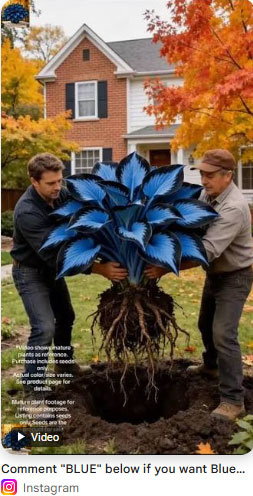
A few things have happened since my first article. The first is that AI has become embedded in just about everything we touch online, including our Google search results. It’s a mixed bag as far as usefulness, sometimes summarizing sources well, other times providing incorrect photos or comically wrong information. Plant-wise, we see it frequently mess up things like deer-resistance and potential toxicity to pets. It washes nuance out of detailed blogs and publications to give people the bite-sized information they want. Many people stop scrolling once they’ve read the summary.
The second thing is that big box stores have opened up their online marketplaces. Walmart, Home Depot, and others used to only offer what they sold in store on their online shops. Now you can go to their website and enter an Amazon-like collection of vendors. Independent scammers gain the credibility of the box store by infiltrating their online stores instead of directing you to Etsy and their own scammy websites.
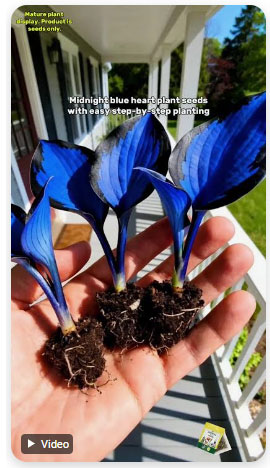
Lastly, AI video generators have come to the market. This allows scammers to not only post static photos of their fake plants, but convincing videos of people planting those plants.
This perfect storm of fake information and AI-generated content is then fed into the Google AI summary. One Artificial Intelligence tricks another into providing false information at the behest of bad actors.
People have been scammed since the beginning of human history. It’s not a new phenomenon and it’s not AI’s fault that people are feeding it bad information. The problem is that the Google AI summary is treated as a credible source by large swaths of the population. Just from my interactions with our customers, I can tell you that people often behave as if the AI summary is a curated source of strictly accurate information. Customers will sometimes dismiss our advice in favor of what AI chatbots and the Google summary tell them.
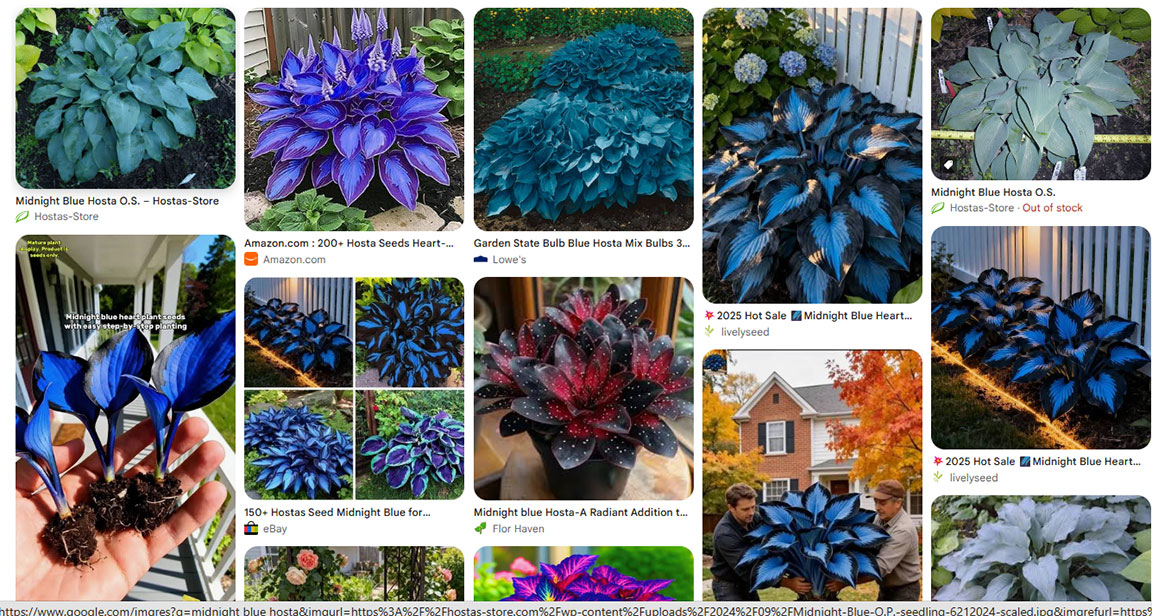
The small piece of good news is that in the few months between my first Google search and this blog, the AI summary has been changed to show that the Midnight Blue Hosta doesn’t exist. It has also been removed from several big box store websites, however you will still find opportunities to buy on Ebay, Etsy, and a handful of scam specific websites. The Google Images page is still full of images of the plant and stills from fake videos, without the disclaimer provided by the AI summary.
Hopefully the creators behind the AI models will get better at training the AI to detect fraud. Unfortunately, I worry that it will continue to play whack-a-mole with ever-evolving scams, or flag real plants as scam in an over-correction. I am also hopeful that the big box stores will understand how these scams hurt their brand and be more careful in their marketplace. The changes that we’ve seen regarding the Midnight Blue Hosta already reflect shifts in that direction.
For what it’s worth, yes, hostas can be blue, but it’s much more of a slate blue or gray. Growers have even developed a red variety, but compared to the candy cane-colored AI photos online, you’d call the color closer to burgundy or brown.
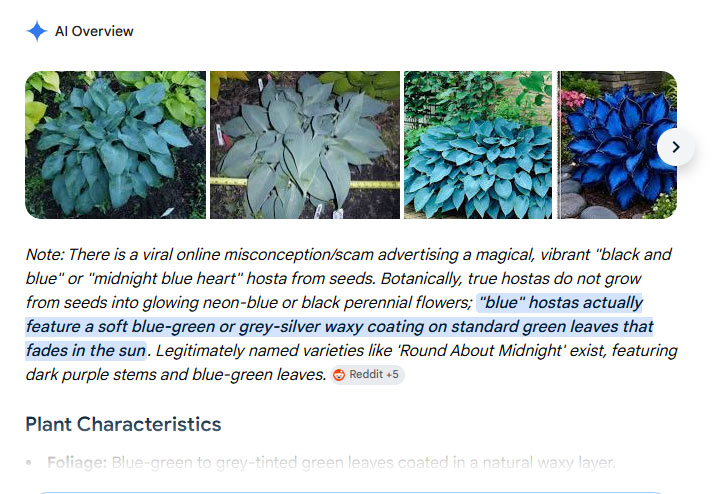
The last piece of good news is that people are googling this plant and finding my old blog. They are doing at least a little research before sending their hard-earned money to a stranger. If you want to avoid AI generated misinformation, here are a few best practices:
- Don’t rely on the AI summary or Google images to provide you information about the existence of a plant. Scroll down into the websites below. You should see big name companies promoting this innovation in genetics. Plant breeding is a business. Plant varieties are patented and copyrighted. No one is actually going to sell you a packet of seeds for a “rare” plant. They are going to go through a larger company who would test it in trial gardens and bring it to market.
- Videos on TikTok and Instagram can be fake. It’s disconcerting to know that some videos online feature people who look alarmingly real, but don’t exist. Make sure that the account has existed for a long time and isn’t just selling one product. Follower counts don’t matter. Scammers use bot accounts to make their scams seem real.
- Shop at brick and mortar, independent garden centers. Come in and touch the plant. See the color in person to see if it lives up to the marketing. Smell it. Read the tag and ask questions. You’ll go home with a plant that you don’t need to worry about being fake or wait ages for seeds to germinate in the hopes that it’s that rare gem as promised. Your money won’t go to some bad actor. You won’t have to haggle with a third party marketplace for a refund. You will have paid someone in your community, who is invested in your success, for a real plant that you can enjoy right now.
Colonial Gardens is an independent garden center located in Phoenixville, PA since 1967. We offer a huge range of plants to help customers be successful in their own yard.
(This blog was written without the use of AI, obviously).