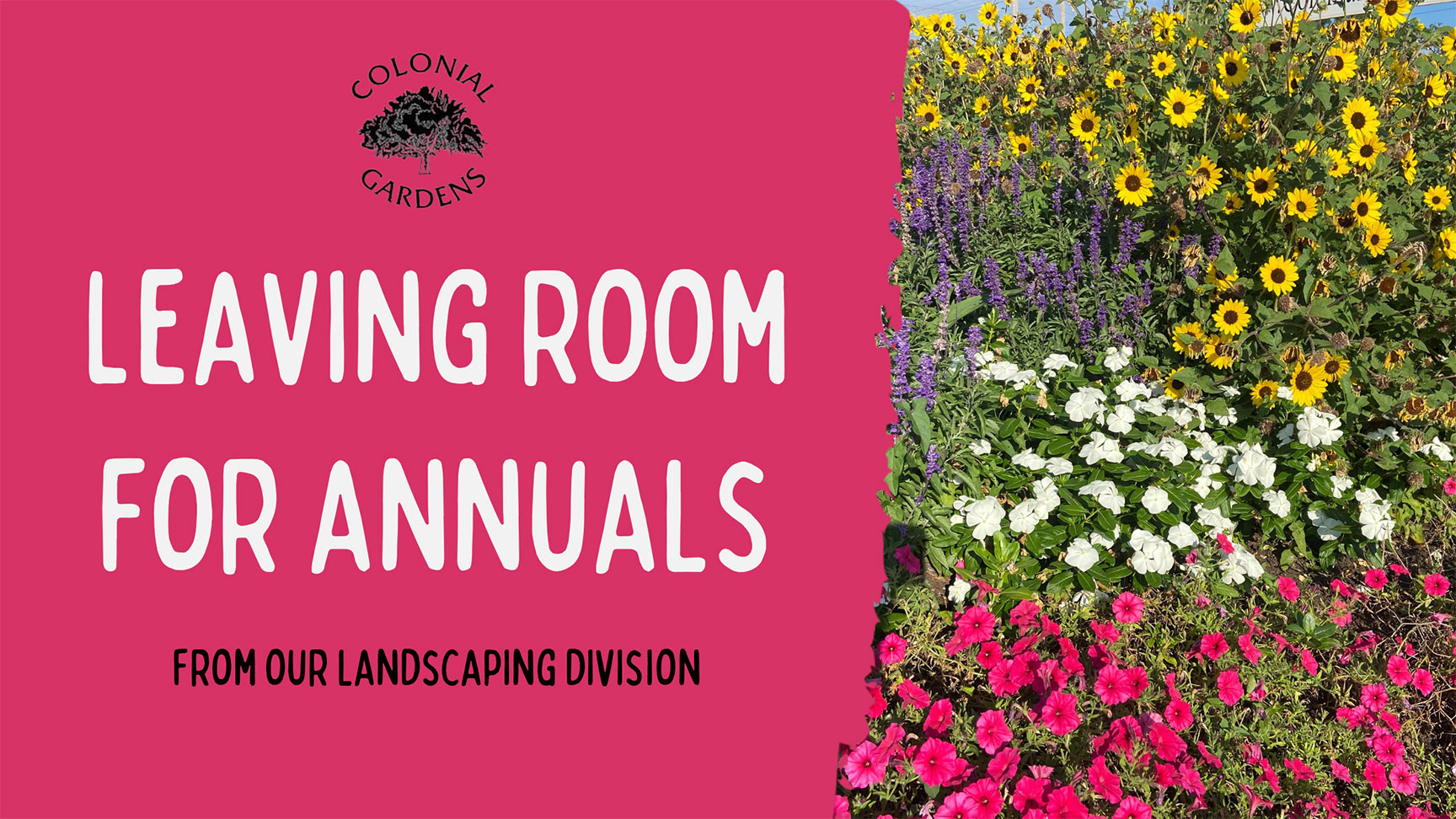
A good landscape includes a mix of plants for long-term success, but leaving room for annuals elevates the planting from good to spectacular.
Our lead landscape designer, Eric, says that landscaping is like a good salad: it requires a mix of ingredients to be truly great. To break down his comparison further, the evergreens are the lettuce: an essential component that defines the space as a salad. But just greens are boring! Add in some deciduous shrubs as veggies. Sprinkle some perennials for nuts and berries.
All of these things make an interesting, elevated salad/landscaping. But the dressing? That’s annuals.
What are annuals?
Annuals are plants that last for one growing season, but tend to bloom from spring until frost. They make the biggest color impact on your garden and can be changed year to year to evolve with your garden over the course of time. Compare this to perennials, which bloom year after year, but tend to have bloom times that last just a few weeks.
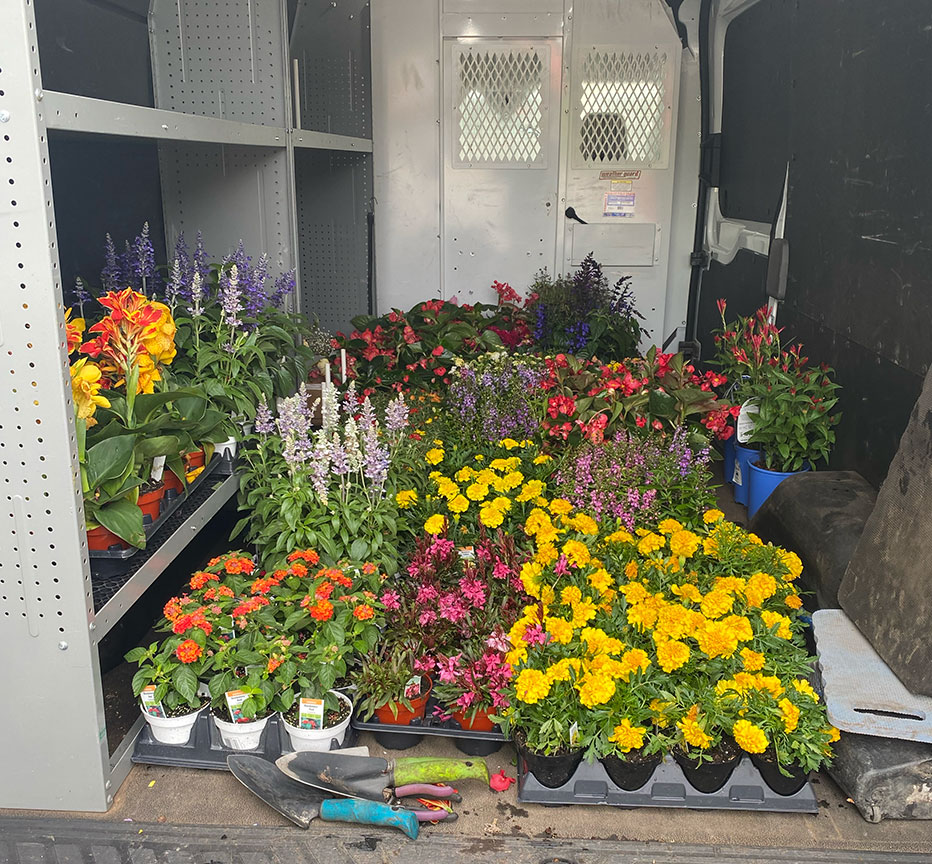
Commonly used landscape annuals include petunias, vinca, geraniums, lantana, begonias, and coleus, but we carry over 100 different species here at Colonial Gardens. They come in every color imaginable to complement your existing landscape or even the color of your home.
Where and When Can I Use Annuals in my Landscape?
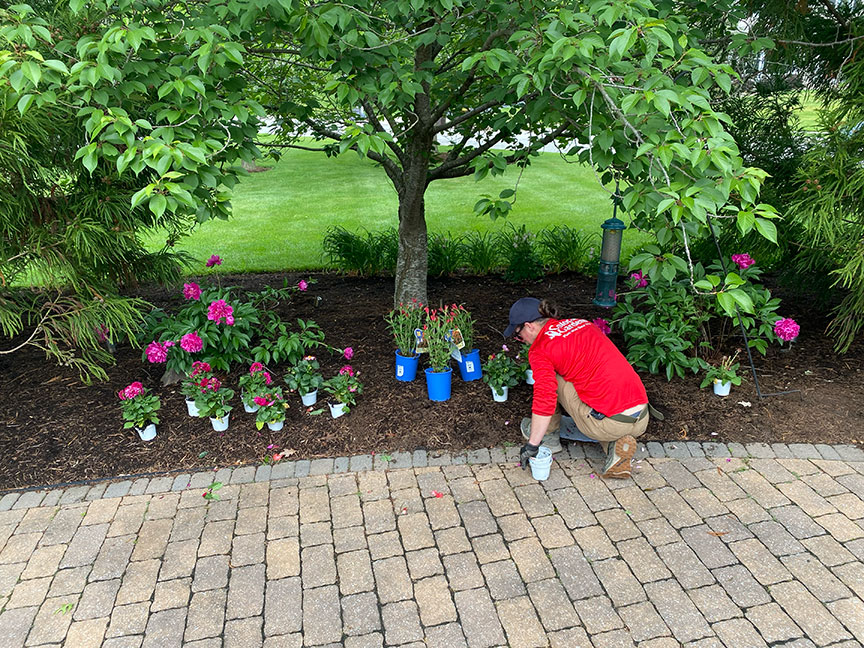
Annuals can be placed just about anywhere, but we tend to leave space for annuals near entryways and towards the front of beds. Entryways benefit from annuals with a lower height that provide a big color impact without getting in the way of bringing groceries in and out. Annuals are also great for filling in spaces between blocks of perennials as we wait for them to mature.
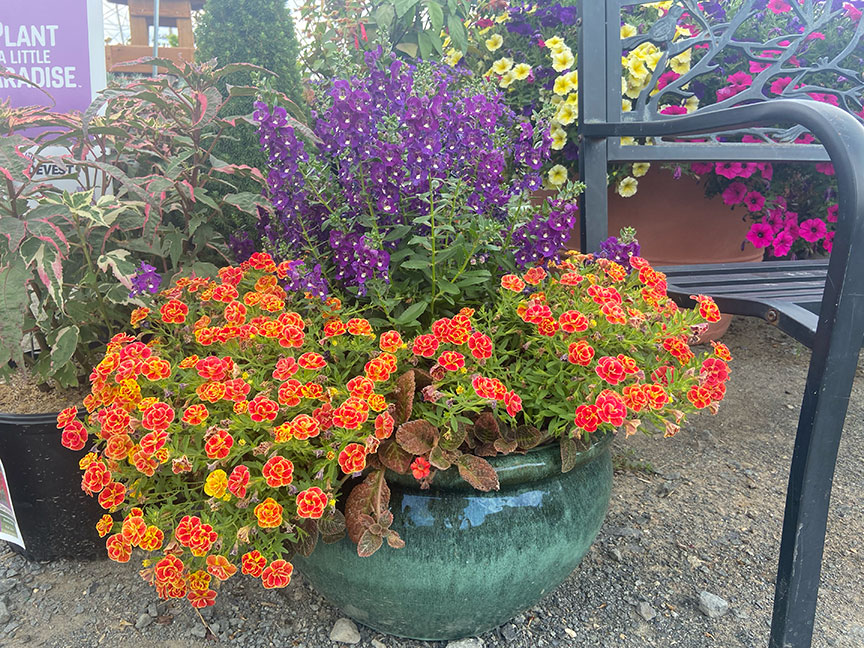
Another great way to add annuals is through planters. Planters often flank entryways or patios and pools for pops of color when you’re most likely to be outside. If you have trouble bending down to the ground to garden, containers can be a more accessible option.
Many annuals do best after the risk of frost has passed, so you may need to wait until May in southeastern PA to plant your summer annuals. For color in the early spring and late fall, you can plant cold-tolerant annuals like pansies, snapdragons, nemisia, and dusty miller.
Keeping Your Annuals Healthy
Like other plants in your garden, annuals will need good soil and supplemental watering when first planted. Because producing flowers requires a lot of energy from the plant, annuals benefit from quick-release fertilizer, which can be mixed into a watering can. This fertilizer should not be used on perennials or shrubs.
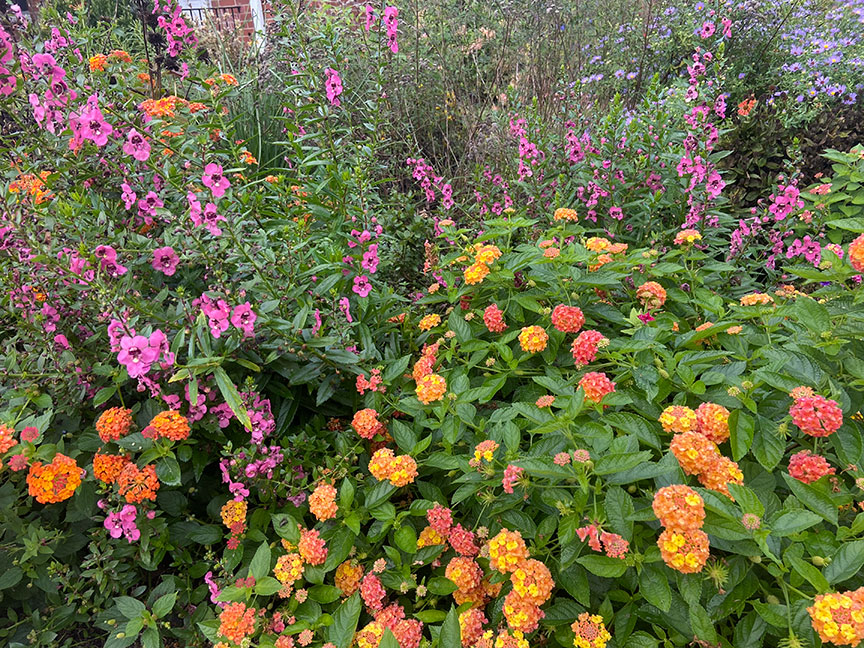
One concern customers commonly have about annuals is increased maintenance. While additional watering and fertilizing are key to thriving annuals, adding annuals can cover your soil, reducing your need for weeding. If you want to reduce your maintenance, select drought-tolerant varieties that don’t need deadheading like vinca, begonias, New guinea impatiens, and angelonia. Also, make sure that you select deer-resistant varieties such as vinca, lantana, or heliotrope if you struggle with deer.
Conclusion:
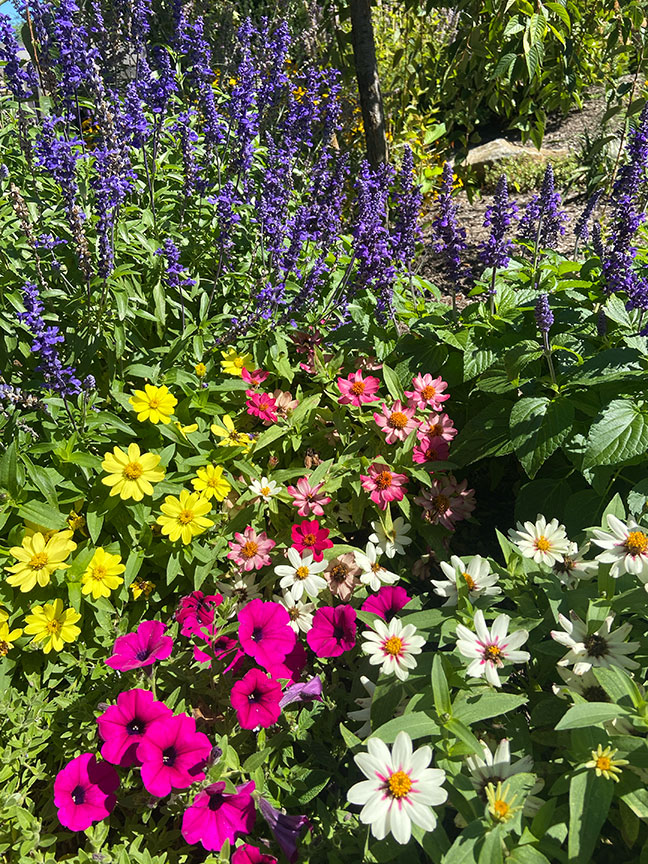
Annuals have great return on investment when planted thoughtfully. For example, Supertunias are an extremely vigorous series of petunias that do not need deadheading and can spread up to 3 feet across. With one plant, you can cover a large swath of space with a blanket of blooms that will last into October or even November. That’s a great value for a spring, summer, and fall full of color and reduced weeds in your beds.
When consulting with a landscape designer, talk about your expectations for color in your garden. While perennials may provide a shifting palette of color throughout the season, annuals can give you bombastic color that bring joy day after day. By using our services at Colonial Gardens, you have access to hundreds of annuals with experts that can give you the best fit for your area.
Colonial Gardens’ landscaping division has over 50 years of experience providing quality designs meant to improve in value as time passes. Our landscape designers are plant experts with access to the full selection of a premium garden center and deep knowledge of what plants perform well in our area. For a design consultation, check out our contact us page.