
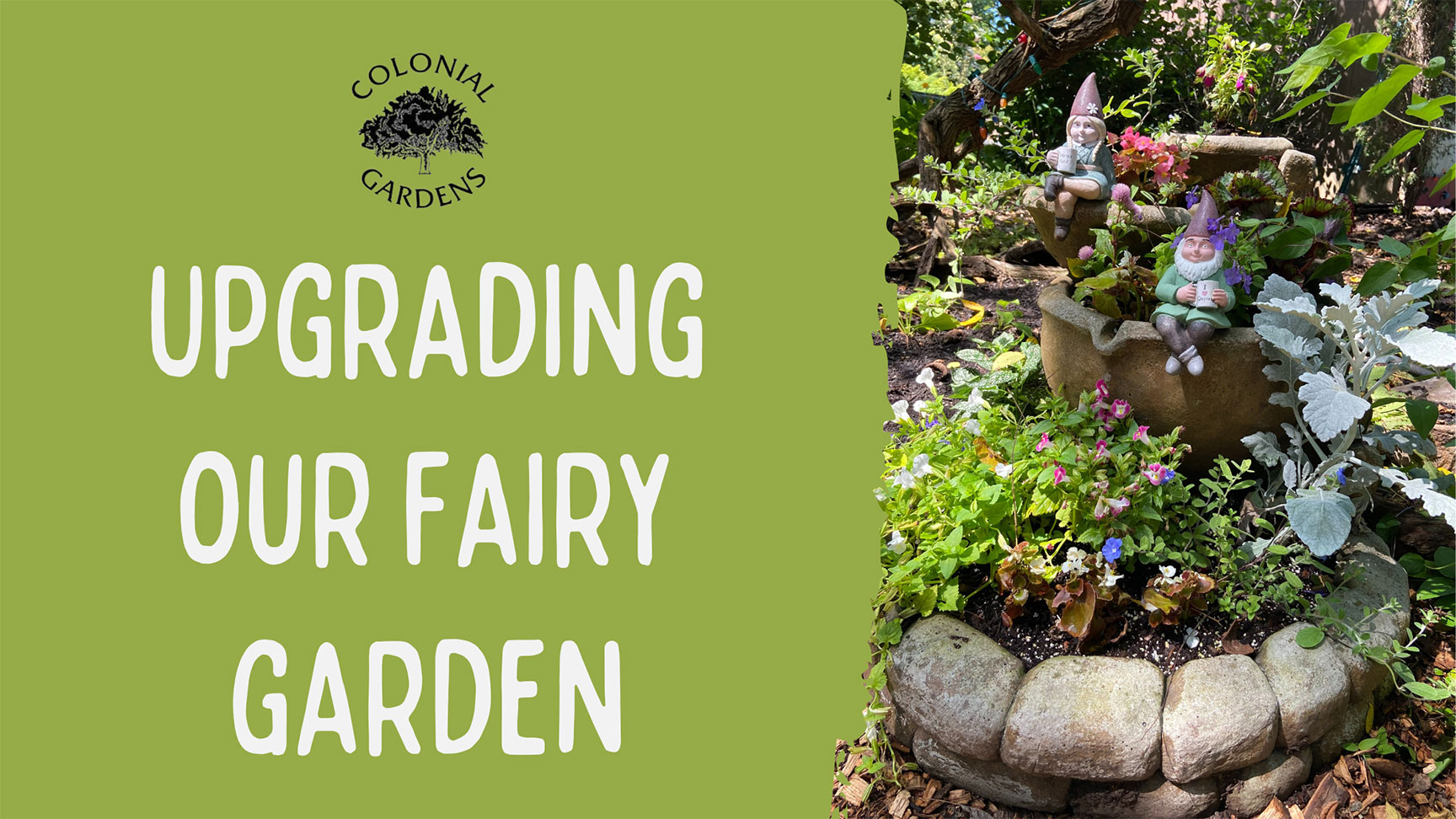
Our full team worked on creating a magical space for our guests to explore this Butterfly Festival.
If you’ve been a long-time customer of Colonial Gardens or are familiar with our events, you have likely visited our woods. We rented the property next door to us for over 30 years before we had the opportunity to purchase it. When we were finally able to take ownership of that 6 acres, it gave us a chance to start thinking about long-term plans to expand our events outside of our Halloween hayrides. The major event Eric had in mind was a holiday light show, which is now Christmas at Colonial. The show may be our most beloved event and is approaching its 10-year anniversary of walk-through holiday lights, dancing displays and all the Christmas magic you could imagine.
As part of that experience, we needed to create walkable spaces that allowed our team opportunities to decorate and hang lights while giving our guests a chance to explore and experience new spaces around every turn. Of the many destinations within our gardens, the fairy garden has been around in some shape or form over the last decade. The idea was to have a whimsical space within the woods specifically geared towards children. This year we had the chance to upgrade that space as some of the old features began to age. With the help of many staff members across teams at the store we were able to reimagine the space to make it a more immersive experience for guests, especially for our upcoming Butterfly Festival. I wanted to give you a glimpse at what that process looked like so that you can see the hard work our team did and also use some of the ideas in your own yard.
The first element that needed to be addressed was some of the plants that had died in last year’s drought. We sometimes over-winter evergreens in the woods, either for permanent planting or as a safe storage from the wind. Unfortunately, due to the 2024 drought here in Phoenixville, we experienced many losses of plants throughout the woods, which already faced a lot of pressure from deer, competition with older trees, and limited care from us. Justin and Kevin, the manager and deputy of operations, are primarily responsible for the upkeep of our grounds and set-up for events. They took this change as an opportunity to address some shortcomings that they have witnessed over the last few years. One of the things they noticed is that children love to explore the fairy gardens, but there isn’t a great resting place for parents to watch their kids from within the gardens without getting in the way. We’re also conscious of the need for more seating areas for folks looking for a place to rest.
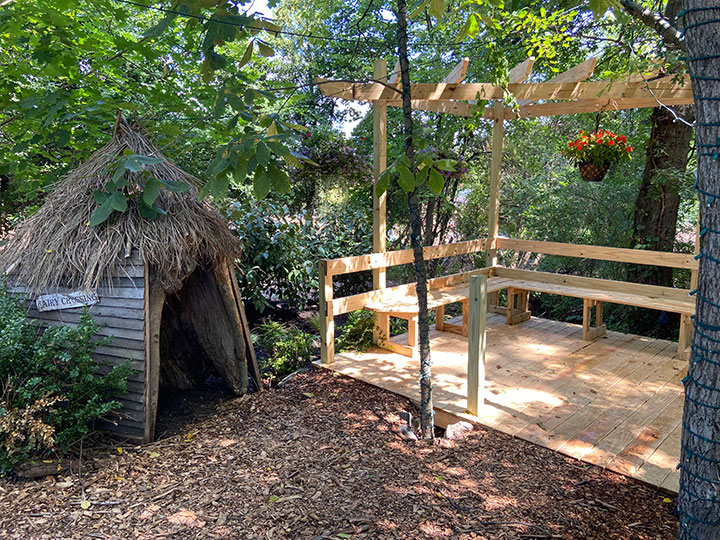
Justin and Kevin removed four old arborvitaes at the left of the entrance of the fairy gardens and decided to incorporate a seating area. They transplanted some viburnum and aucuba to that space to give it a backdrop. As a result, we have a large bench seating area for our guests to rest in, or to watch their children enjoy the rest of the fairy garden. For the butterfly festival, we’ve hung several hanging baskets from the arbor overhead, and the arbor will allow us to hang lights more creatively in the space for the light show. The pathway has been leveled to allow strollers and mobility devices to have easier access to the space. They left the hollow tree stump hut, which has become a staple of the fairy gardens for kids to enjoy, and play pretend amongst the fairies.
Justin and Kevin widened the path through the fairy gardens while fixing some bridges that had become uneven over the course of time. Stumps that have been previously used as planters had decayed far enough that they weren’t as useful as they used to be. Justin and Kevin took this opportunity in removing them to widen the path and build a low wall to separate the path from the plant planting beds. They also secured an arbor and further lined the pathways with stone. Finally, they placed wood chips along the pathway. These wood chips are recycled Christmas trees, and brush from our landscape jobs.
With a pathway widened and dead plants removed, the configuration of the planting beds had significantly changed. Our register team removed all the fairy houses and gave them a deep cleaning at the register. During the slow times in the summer, they also painted rocks and added their own artwork that will be placed within the garden to add little opportunities for discovery along the pathway.
The plant care team and I began the task of redesigning the beds with a long-term plan to maximize the plant life in the space. We tried to incorporate multiple goals within our design. The first is to stick to the planting conditions that we have. The space is largely full shade, which limits our plant palette. There is significant pressure from deer and rabbits within the woods, especially in the early spring. While we knew we could dedicate time to getting the plants established this summer we also knew that we would not have a lot of opportunities to care for the plants in the future, so we needed to plant hardy perennials. We also wanted to honor the intended whimsy of the space by incorporating interesting plants that added texture and charm throughout the gardens. When given the opportunity, we also attempted to add plants that we could use in our cut flower department. Finally, we wanted to showcase plants in the long-term to give our guests inspiration for their own shade gardens.
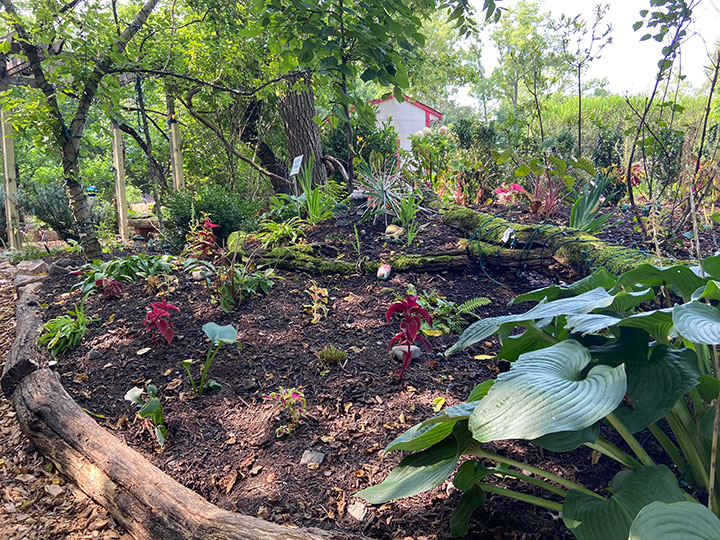
Another limitation was cost. By the time most guests are fairy, it is the beginning of winter, which means that most of these plans will not be in their full bloom. That means that while we have access to a huge supply of plants, it doesn’t make a lot of business sense to order new plants for this space. Instead, we looked at our stock for plants that were becoming unsellable either due to being out of season or suffering from long-term life in a pot. We also pulled from other parts of the woods to divide and transplant plants that were already successful. The plan is for the plants that were installed to establish and spread over the next three years meaning that the peak beauty of the gardens should be reached around 2027. Some of our plant choices include five different species of ferns, lamium, astilbe, bleeding hearts, Columbine, Coral bells, barrenwart, Solomons seal, and Irishmoss. In the meantime, we’ve added annuals such as Browallia, coleus, elephant ears, Torenia, and fuschia. Emilia and Ashley repurposed a leaky fountain as a planter. Reba used her art skills to mold miniature leaf stepping stones.
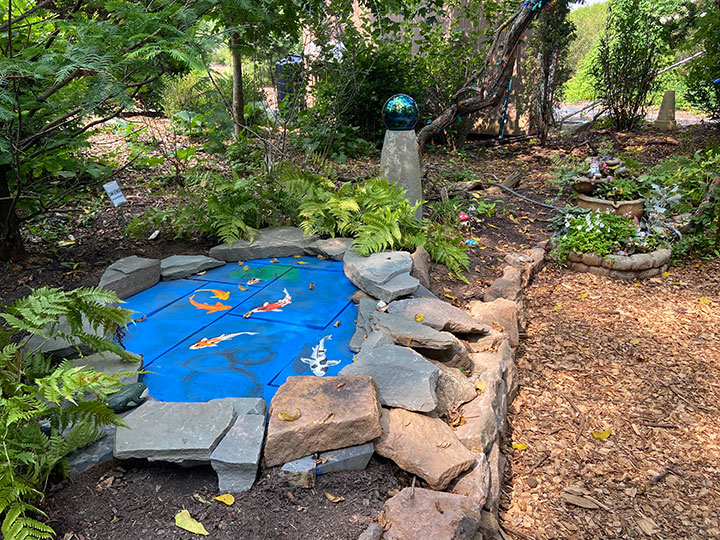
Most of the elements within the fairy garden needed to be able to survive winter weather. We are blessed with artistic staff who develop a lot of the decorations for Christmas and Halloween by creating them by hand. I drew inspiration from the Internet and found a project that incorporated flat bluestone slabs that are painted to resemble the surface of a pond. This piece is installed underneath a redwood tree. It fills the space with something interesting and delightful for our guests and also allows us to vary our planting.
Finally, the pond had to be addressed as it had filled with leaves over the last few winters. The dual layered pond is home to frogs and even the occasional turtle. The buildup of leaves can offer them cover but can also reduce the oxygen available in the water. Lucas and Kevin pulled the old boat out of the pond before draining it. They then pulled hundreds of pounds of wet leaves out of the bottom so that it’ll be clean for the butterfly festival. It was a hard and stinky process so special shout-out to them for tackling it. Justin installed a new fountain that will help reduce the mosquitoes and add another magical touch to the space.
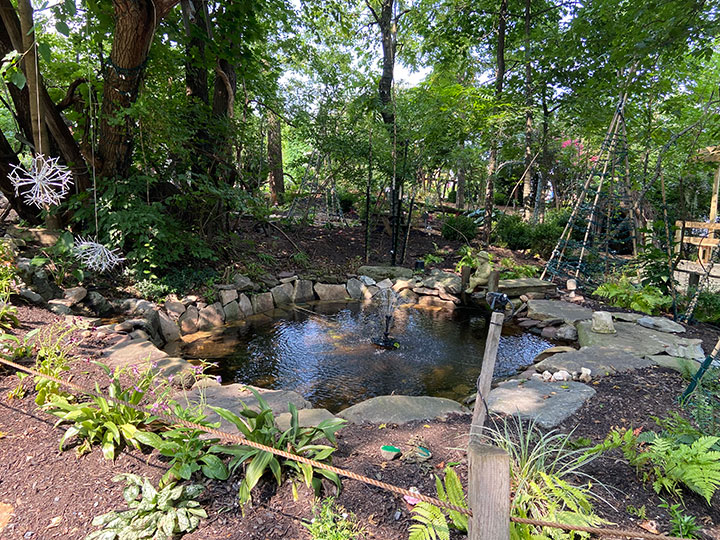
The transformation of the fairy gardens is truly a team project. I want to give a huge shout out to Justin and Kevin who did a lot of the structural work within the space. By the time you see it during Christmas at Colonial, over 20 different staff members will have worked on that space within the last year to add their own particular talents to making it a magical experience for our guests.
We hope to continue to develop our gardens to be a space where our customers can gather inspiration and find some peace from their busy lives. Some long-term customers of ours mentioned to me that Colonial is just a happy place. It’s somewhere you can come to find beauty.
As always, I want to thank our loyal customers over the last 58 years. Without the support of our local community, we would not have the opportunity to work on projects like this. While mini garden centers closed during the off-season, your support of our events allows us to maintain full-time employment for many of our staff throughout the year. We try to honor that loyalty by creating unique experiences that can only be found right here at your local garden center. So if you only visit us during the spring, we hope that you’ll stop by other parts of the year to see all the ways that our team creates magic for our community.