
“It takes a village.” It’s a phrase we’re all familiar with and as a mom of a toddler, I whole-heartedly believe that this phrase is true. But how do we get a village, if we don’t have one already built in?
The answer: start being a villager. Villages are about building a community of reciprocal relationships that can support each other. Our villages can (and should!) be composed of people from different parts of our lives, including our neighbors.
Gardening can be one of the many gateways to building a stronger village, especially within your own neighborhood. Here are a few ways how:
Share the Harvest:
Zucchinis are so prolific, it has become a joke to find a neighbor’s open window and shove one in. While we don’t recommend doing that, there is often more to go around than can be eaten by one family at a time. If you have the time and energy to preserve it through pickling or canning, more power to you! But if you, like me, are thrilled about your harvest, but don’t have time to save it for later, share it.
Is it nerve-wracking to knock on someone’s door? For me, yes! But “Hey, I live across the street and have too many tomatoes. Do you want some?” is a great ice breaker.
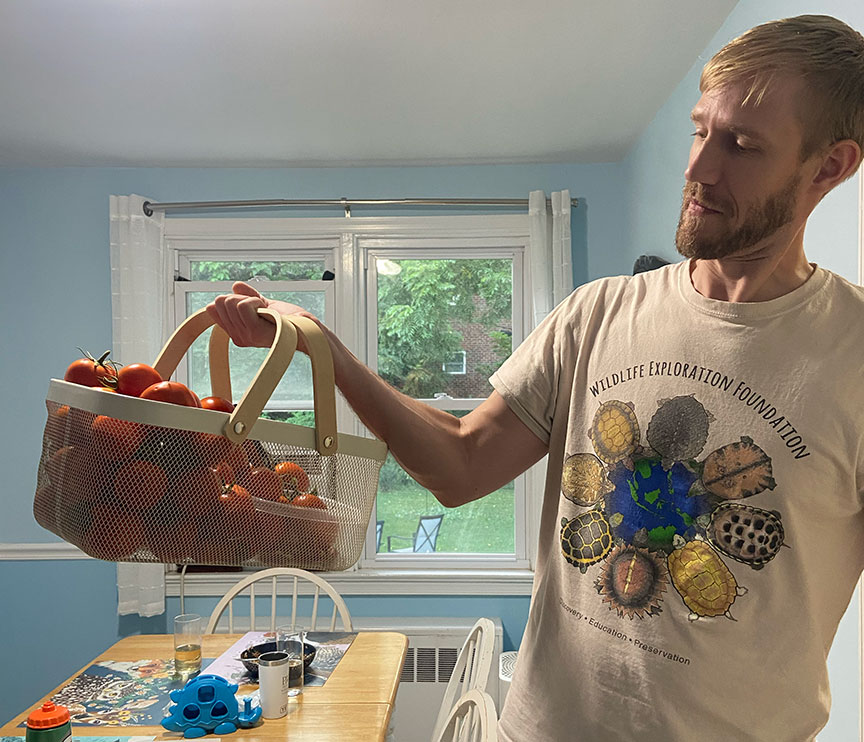
By mid-summer, my harvest basket is overflowing with tomatoes. We’ll make salsa, sauce, and bruschetta, but it still won’t be enough to go through the bounty that our Bush Champion tomato has given us in just a short few weeks. We have a lovely set of neighbors across the street who have given us eggs from their chickens as well as extra bananas. In turn, I baked banana bread and shared our harvests with them. The unique thing about that relationship is that we don’t know each other’s names and they don’t speak English as their first language. Still, this sharing of resources has made me feel more at home and I know that I could knock on their door if we needed help and find a friendly face.
We’ve shared our harvest with our neighbors, our family, and coworkers, but you can also often donate the food to the local food bank. Check out our blog about Food Gardening for Good to see our local food bank’s preference on how you bring in food from your garden.
Garden in the Front Yard:
At our first home together, the only sunny location we had was our front yard. I sprinkled wildflower seeds in our garden beds and grew my veggies in recycled containers. My husband had lived there for over a year and really hadn’t interacted much with the neighbors. Just by virtue of being outside to weed and water my plants, I ended up in many conversations with folks in our neighborhood. As a natural introvert, sometimes that’s a stretch for me! But most of the conversations started with a compliment to my plants and that’s an easy way to pull me out of my shell.
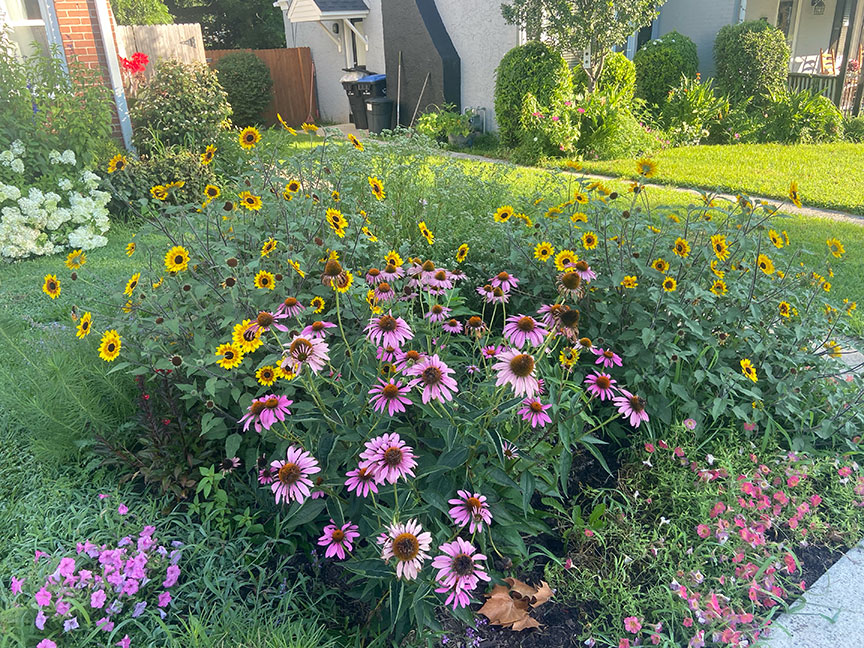
In our current house, we added a pollinator garden to our front yard. To keep it fresh and just to enjoy the flowers, we find ourselves sitting outside, my daughter pointing out the flowers and naming the colors. In the summer, neighbors and their kids walk down the street. We get a chance to smile and wave at neighbors who offer compliments on our flowers. It gives us an opportunity to share neighborhood news. My daughter (who is a toddler and NOT an introvert) has taken her chance to wave at and make friends with every kid that passes by.
Give Your Neighbors Flowers:
Starting a village doesn’t have to cost you a penny. If you already grow flowers, you have built in gifts to give all summer long. The best time to harvest flowers is in the morning. Most flowers have the best vase life if harvested before they come into full bloom and are put directly into water.
The vase can be simple too! If you go through a jar or spaghetti or jam, clean it out and fill it with flowers from your garden. If you want to dress it up, tie a piece of twine or kitchen string around the neck with a little bow.
We love harvesting flowers from the garden! Our floral department works with our plant care team to plant flowers specifically for floral harvests. Some of our favorites are mistflower, sunflowers, gomphrena, and zinnias for long harvests of vibrant blooms.
Add a Sign:
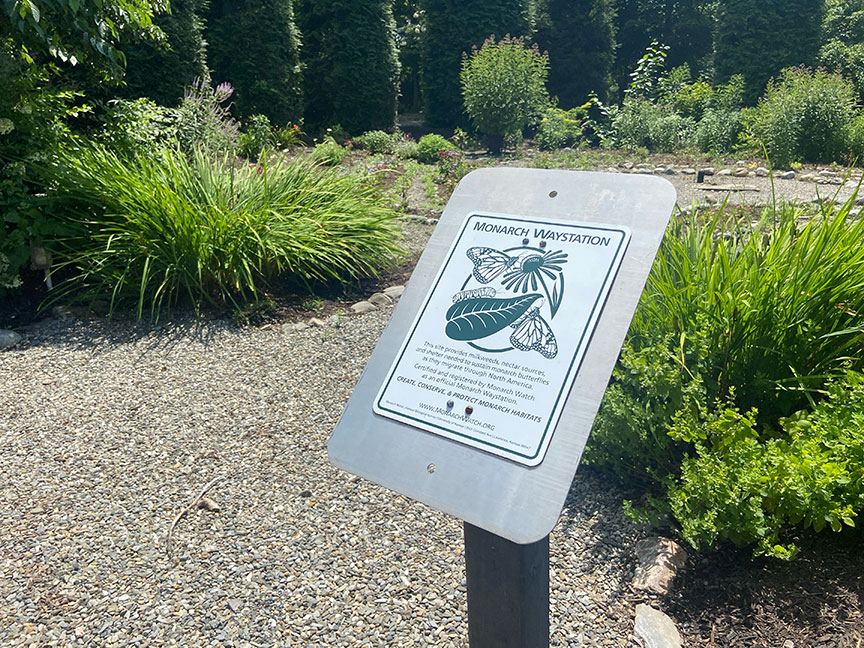
Maybe that sign lets the neighborhood know that your front yard garden comes with a purpose. Maybe it’s a sign that says “Feel free to Pick Some Flowers.” Maybe it’s a different one that says “Ask me about my plants” or “Certified Wildlife Habitat.” These signs can be a conversation starter to connect you with like-minded people in your neighborhood. At Colonial Gardens, we have a sign for our Monarch Waystation to help communicate the purpose of our labyrinth to our customers who visit. Even when the labyrinth isn’t looking its best, it still tells a story of our mission and hopefully continues to inspire people to grow their own monarch habitat.
Offer Your Labor:
Yard work is labor–sometimes a labor of love and sometimes a labor of necessity. With township and HOA rules, long grass and unruly weeds can land homeowners and renters in hot water and even make it difficult to remain in our homes.
My husband and I have actually been in this situation several times in our marriage. Despite mostly being in good health, we did not have the money for a new mower when renting a house in Indianapolis. My husband would use an old weed whacker to keep our front yard under control and prevent citations from the township. Our neighbors graciously gave us a used mower to help us get through that time.
In another moment, after having a C-section to give birth to our daughter, my husband had an emergency appendectomy rendering us both incapable of mowing our lawn. It was help from our village that kept our grass under control.
You never know who is going through a hard time. Getting to know your neighbors can keep you in tune with when they could use your help. So if someone’s yard is out of control and that’s out of the ordinary for them, check in on them. Offer to mow their lawn or pull their weeds.
Take a Friend to the Garden Center:
Okay, this may sound self-serving, but stick with me. One of the attributing factors for the decline in community is the lack of “third spaces,” which refers to the concept of a place that is not home or work that has a low or no cost barrier to entry. In the past, our parents and grandparents flocked to churches and community centers. As kids, we may have spent a lot of time at the mall, browsing the stores with friends. Today, there are fewer places than there used to be to just spend time with your village. But your local garden center can be a third space, too.
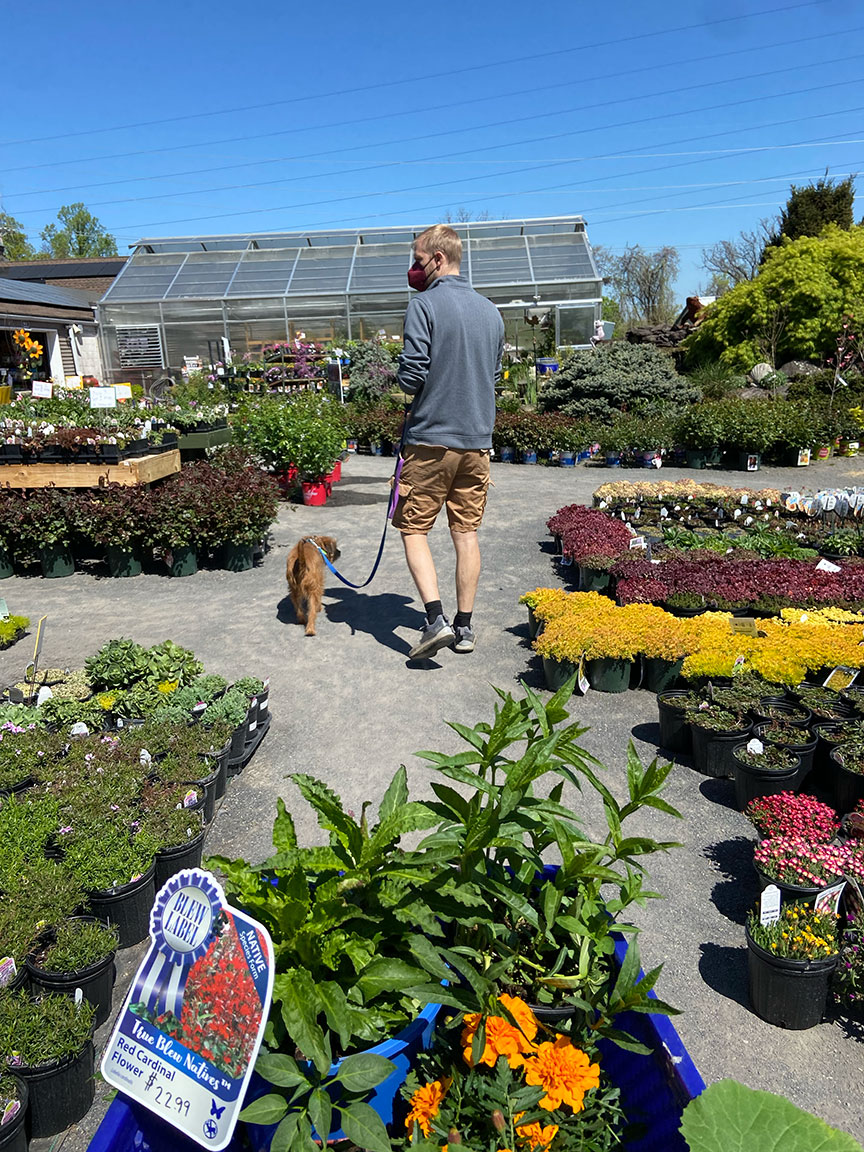
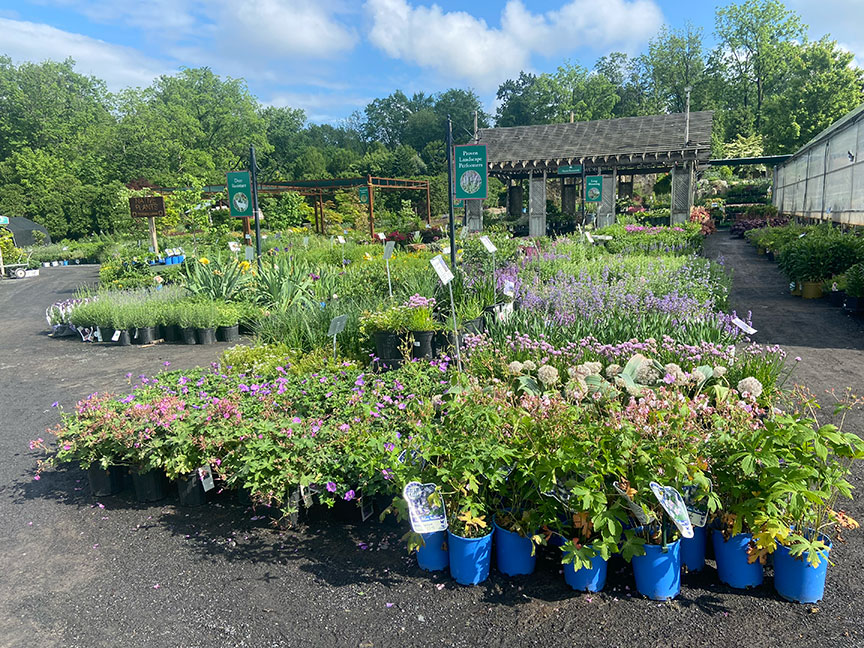
At Colonial Gardens, we have several acres of space that is open to the public. In the winter, we see adult children and their moms stop into the greenhouse to just be around green things. In the spring, we have couples come to browse the plants for a weekday date. We host seasonal events like our Butterfly Festival and Pumpkinland as a way to bring people in who may not be ready to shop right now. So if you have a neighbor you’ve connected with while working in your yard, propose a trip to the local garden center. You can coordinate food garden strategies, check out the latest plants, and enjoy a beautiful day at a local small business.
Now, we don’t exist solely as a third space and couldn’t exist at all without our customers. So if you are using your garden center as your third place, be a good steward of your community and do your plant shopping with us. That goes for all the little coffee shops, record stores, and independent businesses that make our community vibrant.
Creating a village isn’t rocket science, but it is work. Like gardening, it requires persistence and work, but it is also joyful and has payoff. In a world where our algorithms serve to isolate us and big corporations vie for our limited attention, building a village is a buffer against loneliness and a reminder that it’s not all “stranger danger” out there. If you’re looking to grow your village, gardening is a great icebreaker to get you started.
Colonial Gardens is an independent garden center located in Phoenixville, PA. We offer one of the largest assortments of plants in the area as well as landscaping services, a full-service florist, and seasonal events.