A Guide to Crape Myrtles
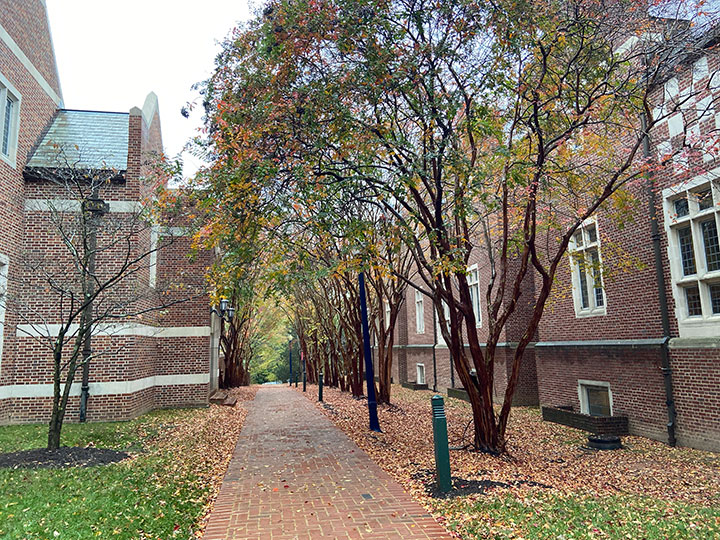
If you’ve ever been down south, you’ve probably seen crape myrtles. In warmer climates, these flowering trees grow to towering heights. I went to the University of Richmond where the crape myrtles line brick paths between the buildings.
“Crape myrtle” describes any plant within the “Lagerstroemia” genus which are native to Asia. Here in the US, you’ll normally see plants that are either L. indica or a hybrid of L. indica and L. fauriei. These plants have been cultivated here in the US for over a hundred years, especially in the South.
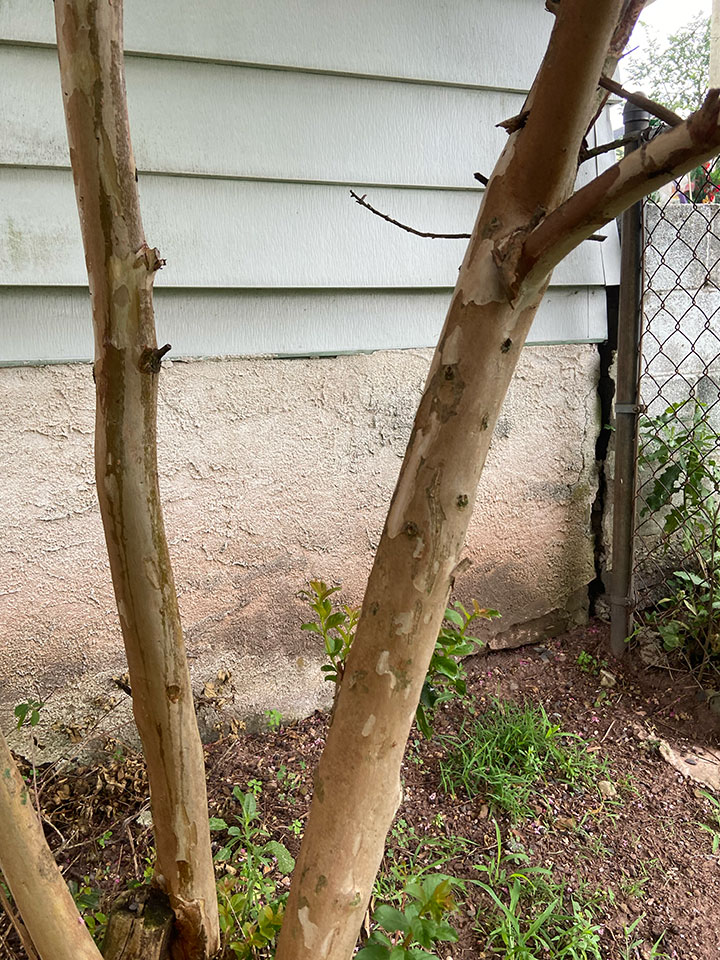
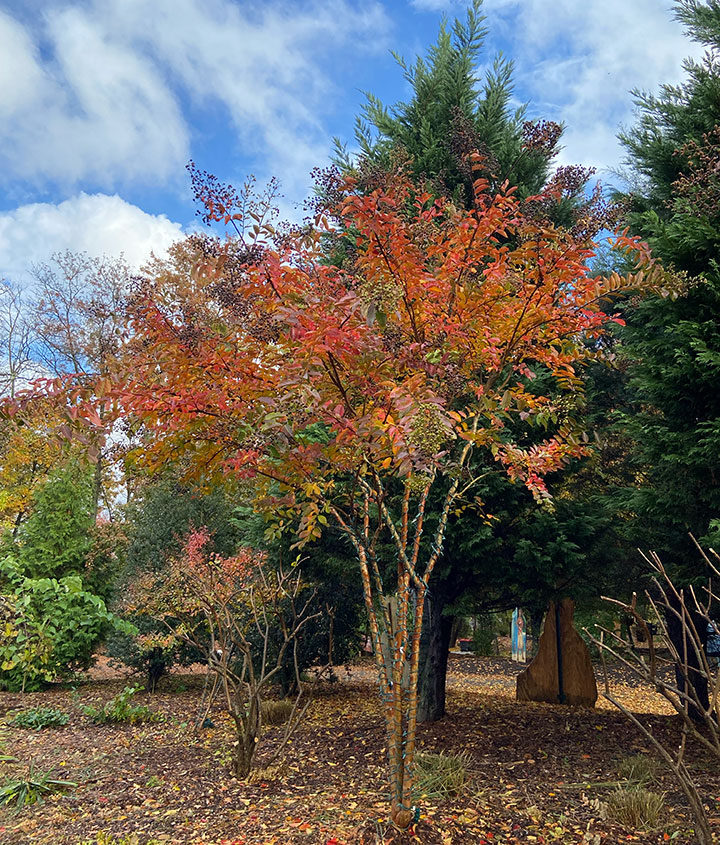
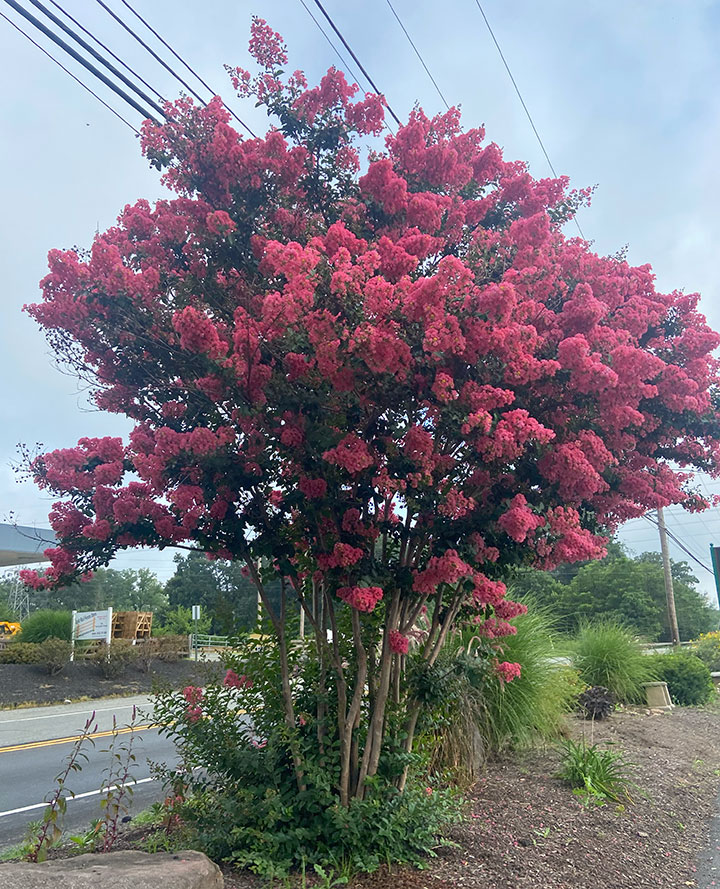
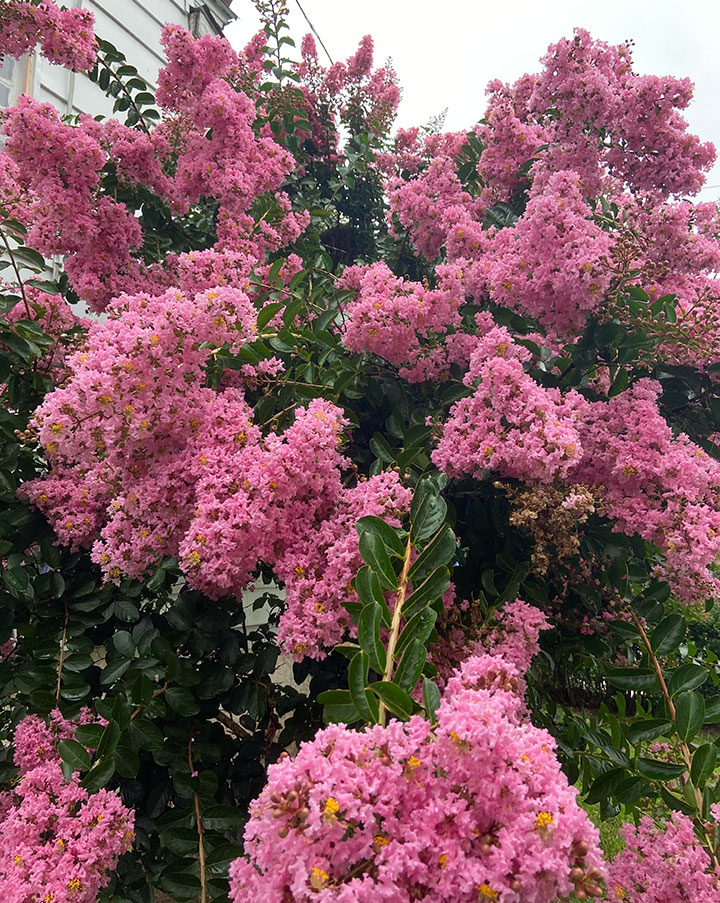
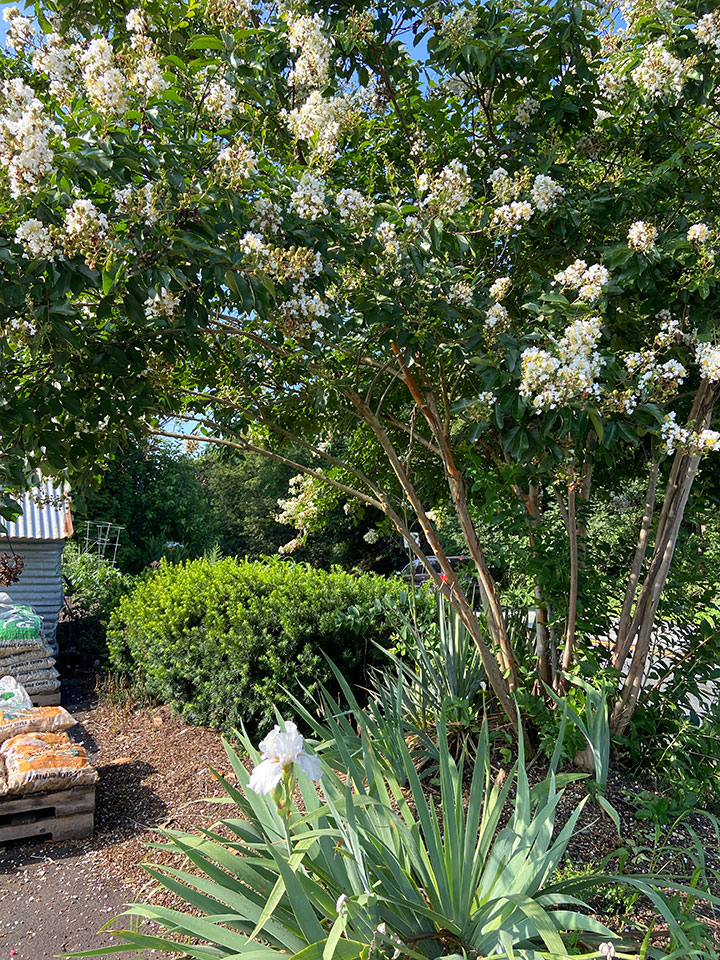
Crape myrtles are popular landscape trees for their graceful forms and many seasons of interest. The standout element is their explosion of large panicles of small papery flowers that emerge in the summer and last for many weeks. Flower color varies by varieties with purples, pinks, reds, and whites. Outside of their blooms, they often have lovely autumn foliage and many varieties feature peeling bark for winter interest after their leaves drop.
General Crape Myrtle Growing Needs:
Growing Conditions: Crape Myrtles need a full sun location for the best flowering. They like their soil well-drained, but need regular access to water, especially within the first year.
Cold Hardiness: Some newer varieties of crape myrtle are hardy to zone 5. Crape myrtles are listed as hardy to Zone 7, which happens to be our zone. In the past, our winters got much colder, resulting in greater damage to crape myrtles. However, more recently we’ve seen less cold damage as our winters have become warmer. If you are worried about your crape myrtle, be sure to mulch around the base to protect the roots.
Deer Resistance: Crape myrtles are generally deer resistant, although we do see some browsing on the specimens in our woods. These plants leaf out later than most other trees in the area, meaning that they are not favored when the deer are most hungry. You still may see some damage from deer in the summer as fawns test new plants.
Native Status and Wildlife Benefits: Crape myrtles originate in Asia. There are no native species to the US. Here at the nursery, we do see bees visit the long-blooming flowers over the summer.
Pruning: Crape myrtles often send thin, suckering stems from the base of the plant. Trim these back to the ground.
Types of Crape Myrtles We Carry:
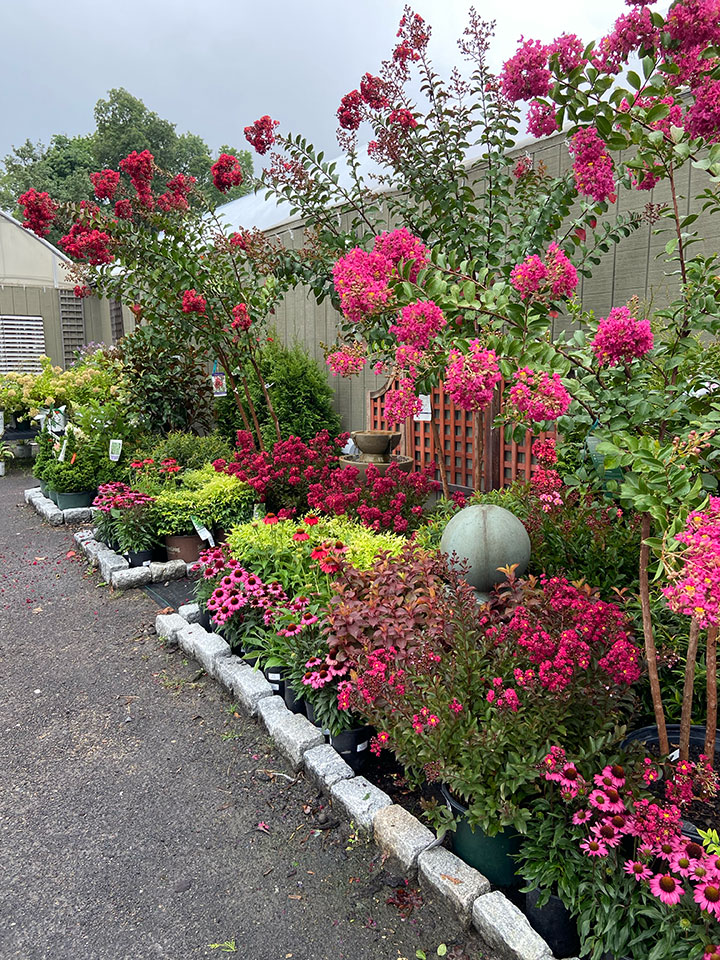
Here at Colonial Gardens, we carry over 25 varieties of crape myrtles to fill all of your garden needs. The plants typically arrive in mid to late May, after the plants begin to leaf out. Varieties vary across the course of the year, depending on our growers. You can find crape myrtles in their own section in the nursery near the shade trees.
Small:
- Bellini Series: The Bellini Series of Crape Myrtles are compact, resistant to powdery mildew, and cold hardy to zone 5. They reach about 3-4 feet by 3-4 feet. Use them as an alternative to panicle hydrangeas in areas with higher deer pressure.
- Barista Collection: This series of Crape Myrtles are very compact, growing no larger than 3 feet tall and wide, with some staying even smaller. The foliage tends to be dark green, sometimes with red undertones. This dwarf collection is very cold hardy.
- Pocomoke: This pink-blooming crape myrtle was bred by the US Arboretum and maxes out at a size of 5 ft. x 5 ft.
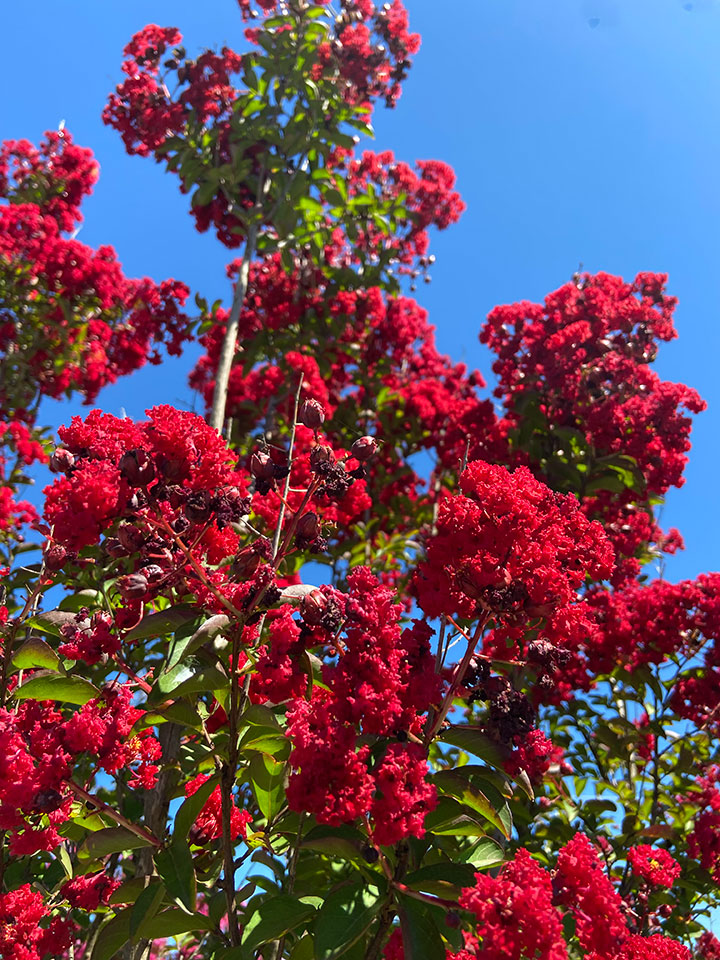
- Enduring Summer Red: This dwarf variety grows to be 5 feet by 5 feet and features deep red flowers and green foliage. This variety has excellent disease resistance.
Medium:
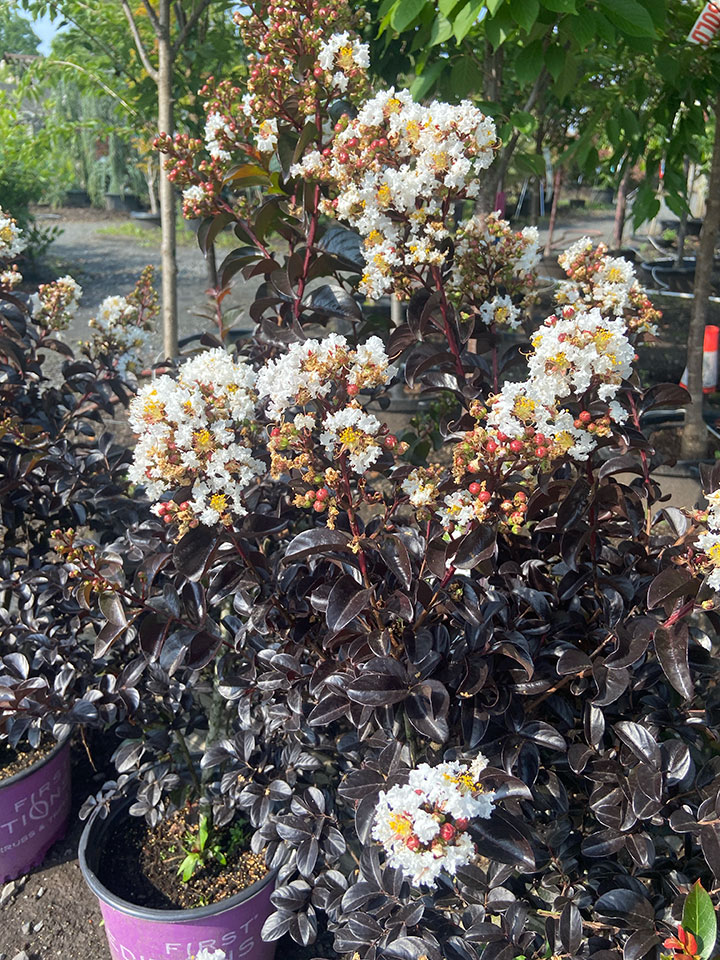
- Black Diamond Series: This series is prized for its deep purple to black foliage, which shines best in full sun conditions.
- Catawba: A true purple crape myrtle, this tree reaches about 15 feet tall by 12 feet wide.
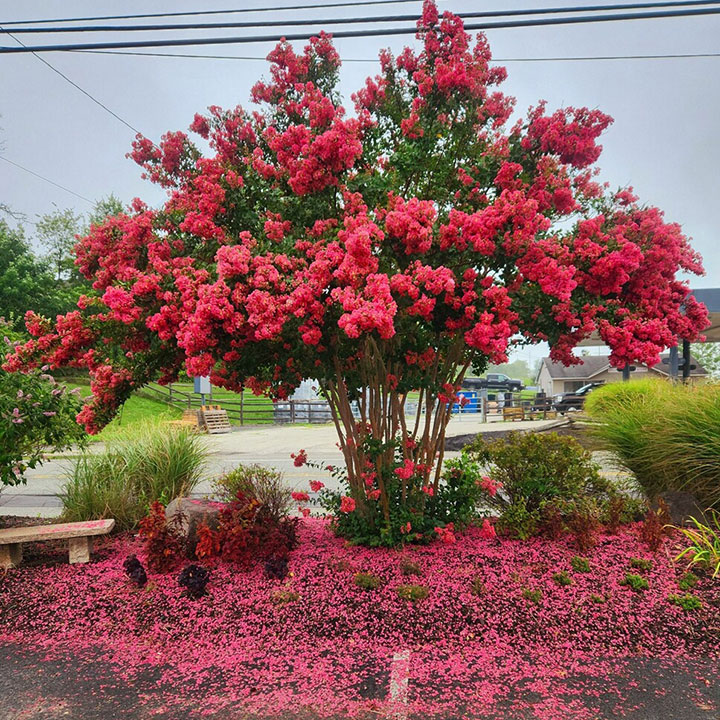
- Pink Velour: This watermelon pink crape myrtle is a vibrant addition to the garden, reaching maturity at about ten feet by ten feet.
- Double Dynamite: The cherry red blooms of this crape myrtle repeat blooming on the same panicle for some of the longest lasting blooms. The foliage is dark, nearly purple and very disease resistant. It matures to about 10 feet tall and 12 feet wide.
- Center Stage Coral: Coral flowers pop against burgundy leaves on this smaller crape myrtle that reaches maturity at 8 feet tall and wide.
Large:
- Red Rocket: This crape myrtle produces true, deep red flowers over dark green foliage. It grows up to 30 feet tall and up to 20 feet wide.
- Miss Sandra: This tree reaches up to 20 feet tall and ten feet wide with true purple flowers.
- Colorama Scarlet: As the name suggests, this crape myrtle has deep red flowers over green foliage. It grows up to 20 feet tall and 12 feet wide.
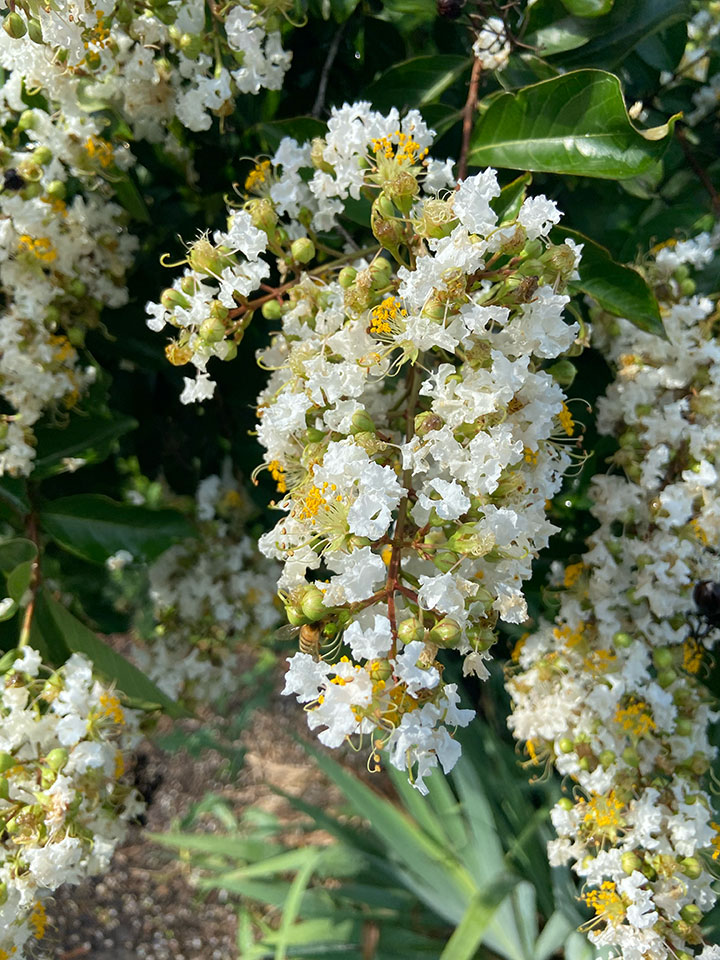
- Natchez: This large tree was considered a breakthrough for crape myrtle breeding, highly resistant to powdery mildew. It grows to be over 30 feet tall and 35 feet wide over 30 years, featuring white flowers and exfoliating bark.
- Tuskegee: Another introduction from the US Arboretum, this crape myrtle is disease resistant and hardy, growing up to 20’ tall and 20’ wide. It sports vibrant dark pink to near red flowers.
Common Problems:
Powdery Mildew: The most common problem with crape myrtles is the appearance of powdery mildew on the leaves. While many modern varieties have been bred to be mildew resistant, this problem may still appear.
Winter Damage: While it is less common in our growing zone than in zones 5 and 6, cold winter weather can damage the tops and even full stems of crape myrtles. Most of the time, this damage does not kill the plant, but may require pruning and leave the tree uneven as new grow comes up to replace the old.